What Does it Mean to Climb?

What Does it Mean to Climb?

**Summary** *The Mountain Was Never the Real Challenge* is a reflective article inspired by *The Climber*. Rather than focusing on mountaineering itself, it explores the deeper themes of solitude, identity, perseverance, and self-discovery. Through the metaphor of climbing, the article examines how the greatest obstacles are often internal, suggesting that every challenge we face shapes not only our path but also the person we become.

In this article

  1. 1. The Mountain That Wasn't Just a Mountain 3 min
  2. 2. Why do WE Climb? 3 min
  3. 3. Alone doesn't always means lonely 3 min
  4. 4. The Weight We Carry 3 min
  5. 5. Nature Doesn't Judge 3 min
  6. 6. The Hardest Mountain is yourself 3 min
Chapter 1

The Mountain That Wasn't Just a Mountain

The Mountain That Wasn't Just a Mountain


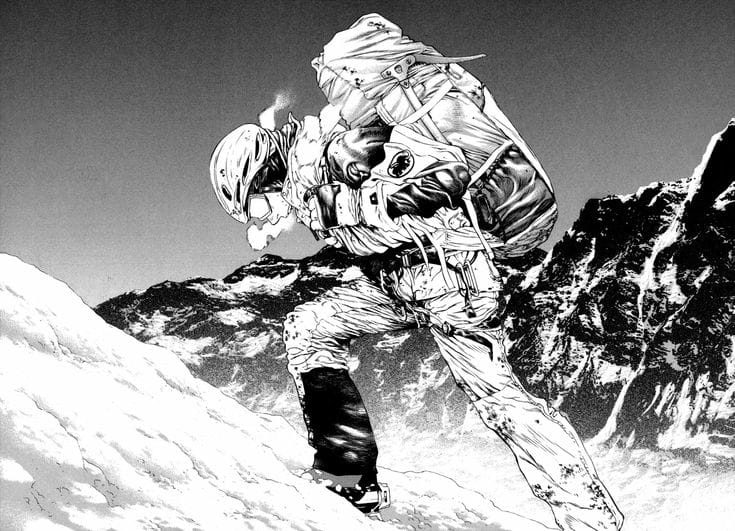
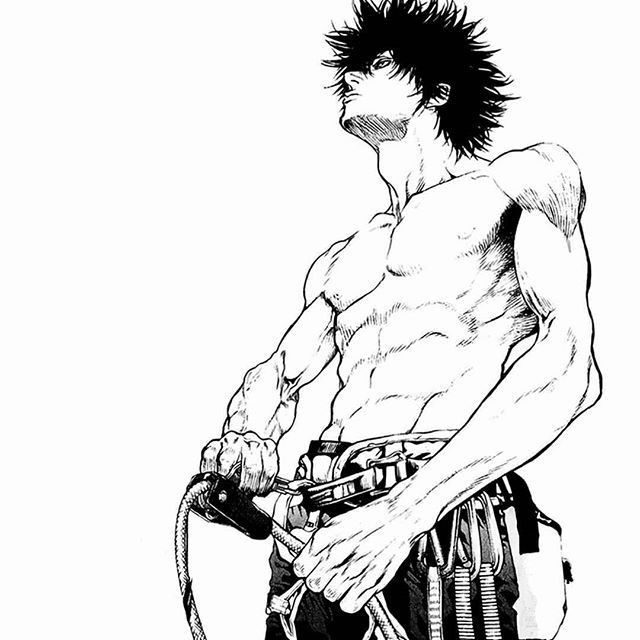
When I first picked up The Climber, I thought I knew what I was getting into. I expected a manga about mountaineering—a story filled with difficult climbs, dangerous weather, and the determination to reach impossible summits. In many ways, it is exactly that. But after reading more, I realized that the mountains weren't what kept me turning the pages. It was the person climbing them.
Unlike many stories where the goal is clear from the beginning, The Climber felt different. It wasn't simply asking whether someone could reach the top of a mountain. It was asking a much quieter question: Why would someone choose to climb in the first place? At first, I assumed the answer would be ambition or adventure. As the story unfolded, however, I realized the answer was far more complicated than I expected.
What struck me most was the silence.
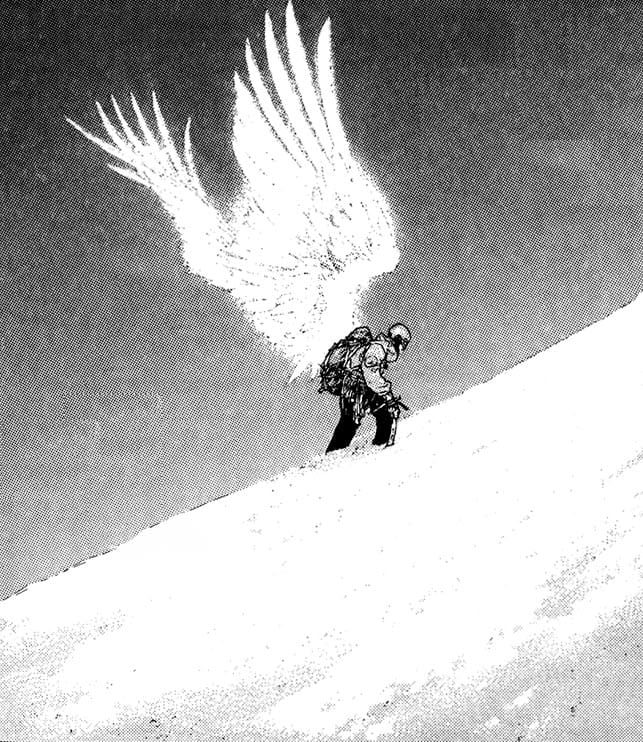
There are moments in the manga where very little is said, yet those moments carry more emotion than pages of dialogue. The mountain doesn't speak. Nature doesn't explain itself. Instead, the reader is left alone with the thoughts of the person climbing, and somehow that silence says more than words ever could. It made me slow down while reading, something I rarely do. Instead of rushing to see what happened next, I found myself sitting with each panel, wondering what the mountain truly represented.
The more I thought about it, the less the mountain felt like a physical place. It slowly became a symbol. Everyone has a mountain in their life. For one person, it might be a dream they've chased for years. For another, it could be overcoming fear, finding purpose, or simply trying to become someone they're proud of. The height of the mountain isn't what matters. What matters is the decision to keep climbing, even when no one is watching.
That's one of the reasons The Climber stayed with me. It isn't interested in making the mountain look glamorous. Climbing is exhausting. It's lonely. Sometimes it feels pointless. There are moments when turning back would seem like the easier choice. Yet people continue climbing anyway. That made me wonder if we all do something similar in our own lives. We keep moving forward, often without knowing exactly what we're hoping to find at the end.
This article isn't meant to be a review of The Climber, nor is it an explanation of its plot. Instead, it's a reflection on the ideas the manga left behind. It made me think differently about solitude, ambition, fear, and the quiet battles that most people never see. More importantly, it made me realize that the greatest challenges aren't always the ones standing in front of us. Sometimes they're the ones we've been carrying inside us all along.
Perhaps that's why the title of this article is The Mountain Was Never the Real Challenge. Because after finishing the manga, I came to believe that mountains are rarely just mountains. They become mirrors. They reflect our fears, our determination, our loneliness, and our desire to keep moving despite all of it. In the end, reaching the summit may be important, but the person who arrives there is never the same as the one who first began the climb.

  1. What is something you got wrong recently — and what did it quietly teach you?
Chapter 2

Why do WE Climb?

Why do WE  Climb?


One question kept returning to me while reading The Climber: Why do people willingly choose difficult paths? Not just mountains, but any challenge that demands years of effort, sacrifice, and uncertainty. From the outside, it often seems irrational. Why spend months preparing for a climb that could end in failure? Why devote yourself to something that offers no guarantee of success?

At first, I thought the answer was simple. People climb because they enjoy it. But the more I thought about it, the more I realized enjoyment alone could never explain the hardships they willingly endure. There has to be something deeper than that.

In today's world, we're often encouraged to choose the easiest route. Technology saves us time, convenience is everywhere, and success is frequently measured by how quickly we can achieve something. If a task becomes too difficult, we're told to find a shortcut or move on to something easier. Yet The Climber presents a completely different mindset. It suggests that some journeys are valuable precisely because they are difficult.

I think everyone has experienced this in some form. Learning an instrument, preparing for an important exam, improving at a sport, or even trying to become a better version of yourself—none of these things happen overnight. There are moments when progress feels invisible. Days when it seems like you're putting in effort without moving forward at all. Those moments can be discouraging, but they are also where real growth begins.

One of the things I admired most about The Climber is that it never treats climbing as something glamorous. It doesn't promise constant excitement or easy victories. Instead, it shows the loneliness, frustration, and fear that often come with pursuing something meaningful. That honesty made the story feel real. It reminded me that every worthwhile goal comes with moments when quitting feels far more reasonable than continuing.

What fascinated me even more was the idea that not every climb is meant to impress other people. We often assume achievements only matter when they're recognized. We celebrate trophies, awards, and public success because they're visible. But many of the hardest climbs in life happen where no one else can see them. Choosing to face your fears, rebuilding your confidence after failure, or continuing to move forward during difficult times rarely earns applause. Yet those may be the climbs that shape us the most.

Perhaps that's why mountains make such a powerful symbol. A mountain doesn't care who you are. It doesn't care about your job, your achievements, or your reputation. It simply stands there, asking the same question to everyone who approaches it: Are you willing to keep going? The answer can't be spoken—it has to be shown through every step upward.

After reflecting on this, I don't think people climb mountains because they want to conquer nature. I think they climb because the journey reveals something about themselves. Every obstacle exposes a new strength or a new weakness. Every setback teaches patience. Every step forward is earned rather than given.

Maybe that's true beyond mountaineering as well. We don't choose difficult goals because they're easy to achieve. We choose them because somewhere along the way, they change us. The summit may be the destination, but the real reward is becoming someone capable of reaching it. And perhaps that's why, no matter how difficult the climb becomes, there are always people willing to take the first step.

Chapter 3

Alone doesn't always means lonely

Alone doesn't always means lonely


One of the ideas that The Climber challenged the most was my understanding of solitude. Before reading it, I often thought being alone and being lonely meant the same thing. If someone preferred spending time by themselves, I assumed they were isolated or avoiding people. But the more I followed the story, the more I realized those two words describe very different experiences.
Loneliness is the feeling of wanting connection but not having it. Solitude, on the other hand, is often a choice. It is the decision to spend time with your own thoughts without needing constant noise or distraction. The difference may seem small, but I think it changes everything.
The protagonist spends a great deal of time alone, especially while climbing. At first, those moments felt almost uncomfortable to read. There were long stretches with very little dialogue, no dramatic conversations, and no one explaining what the characters were feeling. It was just a person, a mountain, and silence. Yet somehow those quiet moments carried more meaning than many stories filled with endless words.
That silence made me think about how uncomfortable many of us have become with being alone. The moment we have nothing to do, we reach for our phones. We listen to music, scroll through social media, or find something to distract ourselves. Silence has almost become something to avoid. Maybe we're afraid of it because silence leaves us alone with our thoughts, and our thoughts aren't always easy to face.
The Climber doesn't present solitude as something magical or easy. In fact, it often shows the opposite. Being alone can be exhausting. It can force us to confront fears we've ignored for years. Without other people around, there is no one to blame for our mistakes or distract us from our insecurities. There is only ourselves. That honesty is one of the reasons the manga feels so authentic.
At the same time, the story suggests that solitude can also become a place of growth. When there is no audience to impress and no expectations to meet, we're left with one simple question: Who are we when nobody is watching? I think that's a question many people rarely ask themselves. We spend so much of our lives trying to fit into different groups that we sometimes forget to discover who we are on our own.
Reading The Climber also reminded me that being surrounded by people doesn't automatically mean we feel understood. Someone can have dozens of friends and still feel completely alone. On the other hand, a person sitting quietly by themselves may feel perfectly content. Loneliness isn't measured by the number of people around us—it depends on whether we feel connected, both to others and to ourselves.
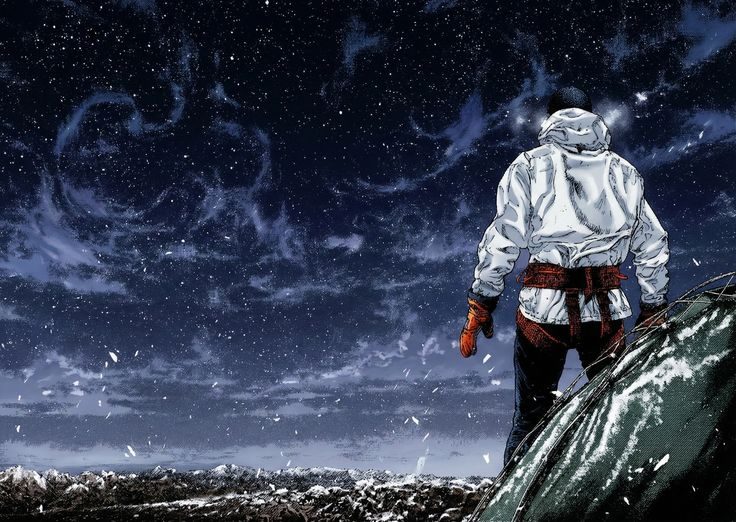
Perhaps that's why the mountains in The Climber feel so symbolic. They strip away everything unnecessary. There are no crowds, no expectations, and no need to pretend to be someone else. It's just the climber and the challenge ahead. In that silence, the mountain becomes more than a landscape. It becomes a place where a person can't hide from themselves.
After finishing this part of the story, I no longer think solitude should always be seen as something negative. It isn't an escape from life or a rejection of other people. Sometimes it's simply a chance to pause, reflect, and understand ourselves a little better. Being alone doesn't always mean being lonely. Sometimes, it's where we hear our own voice the most clearly.
Name the worry that is loudest right now. What is it really about, underneath?

Chapter 4

The Weight We Carry

The Weight We Carry


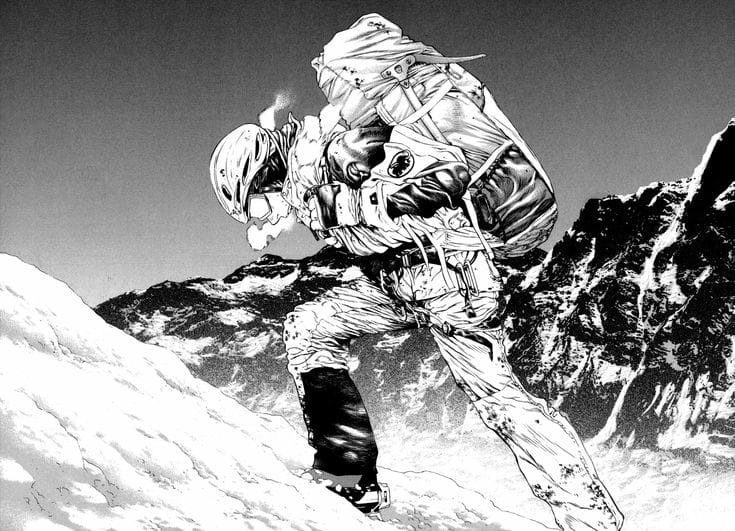
One thing I kept noticing while reading The Climber was that the mountain wasn't the only thing the characters were carrying. There was another kind of weight—one that couldn't be seen. It wasn't packed inside a backpack or measured in kilograms. It came from fear, regret, expectations, and memories that followed them wherever they went.
I think everyone carries something like that.
Some people carry the fear of failure. Others carry expectations placed on them by family, friends, or even themselves. Some hold on to past mistakes for years, replaying moments they wish they could change. These burdens don't disappear just because we ignore them. If anything, they become heavier over time.
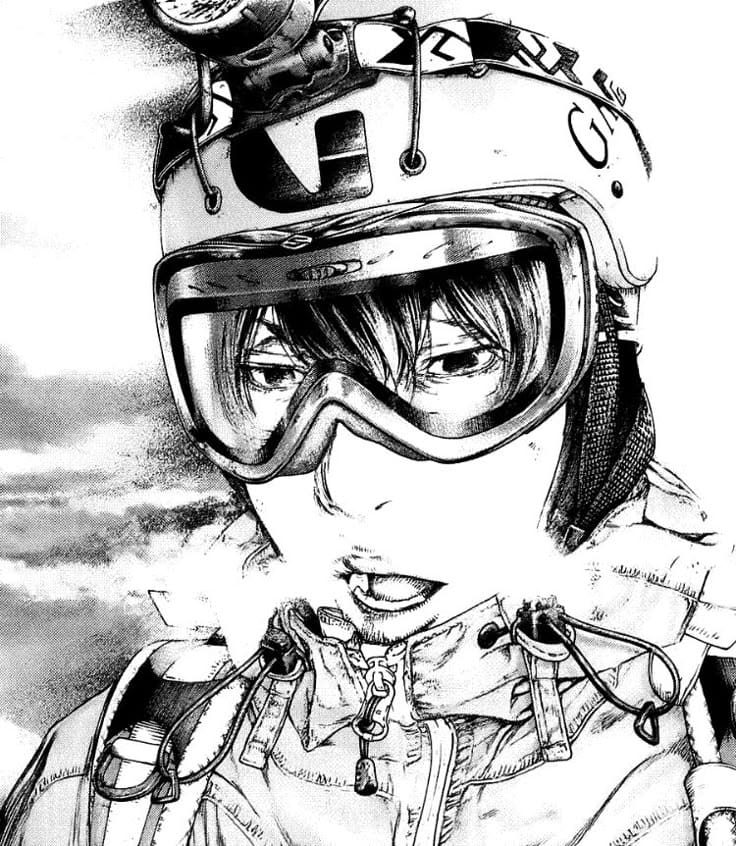
What I found interesting is that The Climber rarely explains these emotions directly. Instead of long speeches about pain or loneliness, it lets the reader feel them through quiet moments. A single expression, an empty landscape, or a long stretch of silence often says more than pages of dialogue. It trusts the reader to notice what isn't being said, and I think that's one of its greatest strengths.
In many stories, the main obstacle is something visible. There's an enemy to defeat, a race to win, or a mystery to solve. In The Climber, however, the greatest challenge often exists inside the climber himself. The mountain is dangerous, but the doubts, fears, and questions he carries are just as difficult to overcome. That idea stayed with me because it feels surprisingly true in real life.
There have been moments when I thought the biggest thing standing in my way was the situation around me. But after thinking about it, I realized that sometimes the real obstacle was my own fear of failing, my hesitation to begin, or the pressure I placed on myself to be perfect. The challenge wasn't always outside of me—it was within me.
I also think we live in a culture that encourages people to hide their struggles. We celebrate success, confidence, and achievement, but we rarely talk about uncertainty. It's easy to believe that everyone else has everything figured out while we're the only ones struggling. The truth is probably the opposite. Most people are carrying battles that remain invisible to everyone around them.
That's another reason the mountain feels like such a powerful symbol. It doesn't judge what you're carrying. It doesn't care how successful you are, how confident you appear, or how many people admire you. Once the climb begins, all of those things lose their importance. The only thing that matters is whether you can keep taking the next step.
Perhaps that's why climbing feels so honest. It strips away the distractions of everyday life and leaves you alone with yourself. You can't pretend to be stronger than you are, and you can't hide behind appearances. The mountain reveals both your strengths and your weaknesses without saying a single word.
After reading The Climber, I started wondering if the heaviest things we carry are never physical at all. They are the fears we refuse to face, the expectations we place on ourselves, and the doubts that quietly grow in our minds. Maybe overcoming them is the hardest climb any of us will ever make. And perhaps that is why reaching the summit feels so meaningful—not because we've conquered the mountain, but because we've learned to carry ourselves a little differently on the way up.

Chapter 5

Nature Doesn't Judge


One of the most beautiful ideas I found in The Climber wasn't about climbing at all. It was about nature. Throughout the story, the mountains never change for the people who approach them. They don't become easier because someone is experienced, nor do they become harder because someone is afraid. They simply exist, completely indifferent to who stands before them.

At first, that idea felt almost cold. We often imagine nature as something comforting, a place where people go to find peace or escape from their problems. But The Climber presents a different perspective. The mountain isn't there to comfort anyone. It doesn't care about your dreams, your fears, or your past. If the weather changes, it changes for everyone. If the path becomes dangerous, it doesn't make exceptions. In that sense, nature is completely fair.

The more I thought about it, the more I appreciated that honesty.

Modern life constantly encourages comparison. We compare our grades, our appearance, our achievements, and even our happiness with other people's. It's easy to feel as though we're constantly being judged, whether by society or by ourselves. There always seems to be an expectation to become more successful, more productive, or more accomplished than the person next to us.

The mountain doesn't care about any of that.

It doesn't know how much money you have, how many followers you have on social media, or what job you hope to get one day. It doesn't recognize titles or status. Once you begin the climb, everyone is faced with the same reality. The mountain asks for patience, preparation, and respect—nothing more.

I think there's something incredibly freeing about that. In a world where we're often defined by labels, nature strips those labels away. Standing in front of a mountain, you're no longer a student, an employee, or someone trying to prove themselves. You're simply another human being facing something much larger than yourself.

That perspective also reminds us how small we really are. At first, that might sound depressing, but I actually find it comforting. We spend so much time worrying about mistakes, embarrassing moments, or what other people think of us. Yet mountains have stood for thousands of years. They existed long before us, and they'll remain long after we're gone. Realizing that makes many of my everyday worries feel much smaller than they seemed before.

Perhaps that's one of the reasons people are drawn to nature in the first place. It's one of the few places where life slows down enough for us to remember what truly matters. There are no advertisements telling us what to buy, no notifications demanding our attention, and no constant pressure to keep up with everyone else. There is only the next step, the sound of the wind, and the quiet reminder that not everything in life needs to move so quickly.

The Climber captures this feeling beautifully. It doesn't portray nature as an enemy to defeat or a trophy to conquer. Instead, the mountain becomes something worthy of respect. It challenges people not because it wants them to fail, but simply because that is its nature. Whether someone reaches the summit or turns back, the mountain remains unchanged.

Maybe that's the greatest lesson nature offers us. It doesn't judge our successes or failures because those ideas belong to us, not to it. Nature simply exists, and in doing so, it quietly reminds us that our value has never depended on titles, achievements, or the opinions of others. Sometimes, standing before something so vast is enough to make us remember who we are—and who we don't need to pretend to be.

Chapter 6

The Hardest Mountain is yourself


By the time I reached the later chapters of The Climber, I had stopped thinking of the mountain as the main challenge. It was still dangerous, unpredictable, and demanding, but it no longer felt like the story's greatest obstacle. The real struggle seemed to exist somewhere else—inside the person climbing it.

I think that's true for many of us.

When we fail an exam, lose confidence, or hesitate to chase something we care about, it's easy to blame the circumstances around us. Sometimes those circumstances are genuinely difficult, but not every battle comes from the outside. More often than we'd like to admit, the loudest voice telling us to stop is our own.

Fear has a strange way of changing the way we see the world. It convinces us that failure is permanent, that one mistake defines who we are, or that everyone else is somehow more capable than we are. None of those thoughts are easy to escape because they don't sound like lies when we're experiencing them. They sound like facts. That, I think, is what makes internal battles so exhausting. Unlike a mountain, you can't simply walk away from your own thoughts.

The Climber portrays this beautifully. The physical climb is visible to everyone, but the emotional climb is invisible. Readers can sense the doubts, hesitation, and loneliness that exist beneath every decision. It reminded me that the greatest struggles people face are often the ones nobody else notices. We see someone's achievements, but we rarely see the fear they had to overcome to reach them.

I also realized that growth rarely feels dramatic while it's happening. We often imagine change as one life-changing moment, but in reality, it usually happens through hundreds of small decisions. Choosing to get back up after failing. Choosing to continue when progress feels invisible. Choosing to believe in yourself, even when confidence is difficult to find. Those choices don't seem significant on their own, yet over time they slowly shape who we become.

One thing I admire about mountains is that they never allow shortcuts. No matter how determined you are, you still have to take one step after another. I think personal growth works in much the same way. We can't skip the uncomfortable parts. We can't suddenly become confident without first experiencing self-doubt, and we can't become resilient without facing challenges that test us. The difficult moments aren't interruptions to the journey—they are the journey.

Reading The Climber also made me think about how often we compare our progress with other people's. We look at someone who seems successful and assume their climb was easier than ours. What we don't see are the setbacks, failures, and moments of uncertainty hidden beneath the surface. Every mountain looks different from a distance, just as every person's life does. Comparing paths only distracts us from our own climb.

Perhaps that's why I believe the hardest mountain isn't made of rock or ice. It's built from our fears, insecurities, regrets, and the expectations we place upon ourselves. Unlike a real mountain, this one doesn't have a visible summit. Every time we overcome one fear, another challenge appears. Every time we grow, life presents another opportunity to test that growth.

At first, that thought seemed discouraging. Now I think it's strangely comforting. It means that life was never about reaching a final summit where everything becomes easy. It's about continuing to climb despite knowing there will always be another mountain ahead.

Maybe that's what The Climber taught me more than anything else. The greatest victory isn't standing at the top of a mountain. It's becoming the kind of person who doesn't stop climbing simply because the path becomes difficult. In the end, the mountain in front of us is only part of the journey. The one within us is the climb that truly lasts a lifetime.

More by Awantika Mishra

How Fight Club Made Me Question Modern Life
Article

How Fight Club Made Me Question Modern Life

How Fight Club Made Me Question Modern Life explores how Fight Club goes beyond being a psychological thriller and becomes a commentary on...

7 chapters·6 days ago